Originally this essay, “I, Journalist” appeared in the online literary magazine, The Seventh Wave, in October 2016. I am republishing it here as a call out for journalists in a time when the craft and practice of journalism is increasingly under fire.
***
“If you’re tired of biased, mainstream media reporting (otherwise known as Crooked Hillary’s super PAC), tune into my Facebook Live broadcast. Starts at 8:30 EST/5:30 PST — you won’t want to miss it. Enjoy!”
To Those Who Use the Term “Mainstream Media”:
I am a journalist, editor, factchecker, professor and storyteller.
In these capacities, I have worked at Forbes, Barron’s, Inc., USA Today, Reuters, MSNBC, The National Interest, and other outlets. I have collaborated with hundreds of senior and assistant editors, reporters, photographers, copyeditors, and factcheckers on investigative pieces uncovering the billionaire money trail in Kazakhstan (Emerging Market Gold), on book reviews on Carly Fiorina pre-presidential run (2 Books, 2 Views on Carly Fiorina), and even on branded content (2014 BNP Paribas Individual Philanthropy Index — Philanthropic Journeys: The Importance of Timing). None of these outlets, none of my colleagues, and none of my work is “mainstream.” Why? Because today, “mainstream” could not exist in a country full of diversity and in a media industry that is in the midst of upheaval and change.
What is “mainstream” anyway? Can we believe that there is one “prevailing current” when our nation was raised on the notion of debate and dissent (thank you Hamilton v. Jefferson), when today over 800 languages are spoken in New York by some measure, and when the vastly differing eco-regions of the United States shape character (surfer versus cowboy anyone)? I am reminded of a scene in Monthy Python’s, “The Life of Brian,” where Brian is telling the crowd of people who have been following him to stop. He says they don’t need him, urges them to think for themselves, adding, “You’re all individuals…you’re all different.” One tiny voice is heard in the distance, “I’m not…”
Using the word “mainstream” is that person saying they are not ready to think for themselves.
The best antonym for mainstream is “curious.” We are a country of curiosity-seekers that has upended everything from how and what we watch, to what we read and consume. Just look at AT&T’s proposed $85 billion purchase of Time Warner announced this week : an old school telephone company and broadcast network coming together because the 21st century demands new forms of individualized content delivered to each of us based on our own curious minds. If we sit down on the couch with our partners or families, it is not to experience the same story — we each sit exploring our own interests on separate devices. This curiosity by extension has changed media including news media.
According to a Pew Center report, “State of the News Media 2016,” we seek information from increasingly divergent sources. This is not the Mad Men area of the big three networks and controlled news. Our growing and increasingly diverse population needs news from different sources. Indeed as the report states, “Eight years after the Great Recession sent the U.S. newspaper industry into a tailspin, the pressures facing America’s newsrooms have intensified to nothing less than a reorganization of the industry itself, one that impacts the experiences of even those news consumers unaware of the tectonic shifts taking place.” I have seen the changes firsthand: the cutbacks, layoffs, and the stories left untold because of a lack of resources. We live in an era where media outlets try new strategies to gain audience, where it is easier to launch new digital-only media properties to target specific readers (think: Breitbart or The Outline), and where citizen journalists take up the mantle to share the stories that aren’t being covered or funded because of layoffs (think: trend in crowdfunding investigative pieces). You might not be aware of the upheaval, but it is happening, and there is a lot at stake.
For one, 62% of US adults overall now get news on social media sites (Pew Report). Whether you are a newspaper, magazine, or digital outlet, you have to struggle with not only getting your story distributed on the best social media site (Do you ally with Facebook or Google? Do you Tweet or Snap?), you are dealing with mounds of competition to get your story seen in the “Internet of noise.” But this overwhelming democratization of information has fanned the flames of our curiosity: the consumer becomes in control and the burden is on media to court us.
Indeed, nothing about this industry upheaval leads to “mainstream” thinking. Instead, the tributaries of thought are stronger than any one stream. New ideas are opening up new opportunities to a vast array of people. Each day when I walk into my classroom, I share this enthusiasm with my students. In the short years I have been teaching, I have seen how my students have shifted their consumption of news from Facebook to Snapchat. We need these young eyes to participate in these changes and continue to move media forward with fresh ideas on how to engage readers and tell stories that have meaning and impact.
We should not scare budding journalists into silence, which was what one student expressed feeling this week.
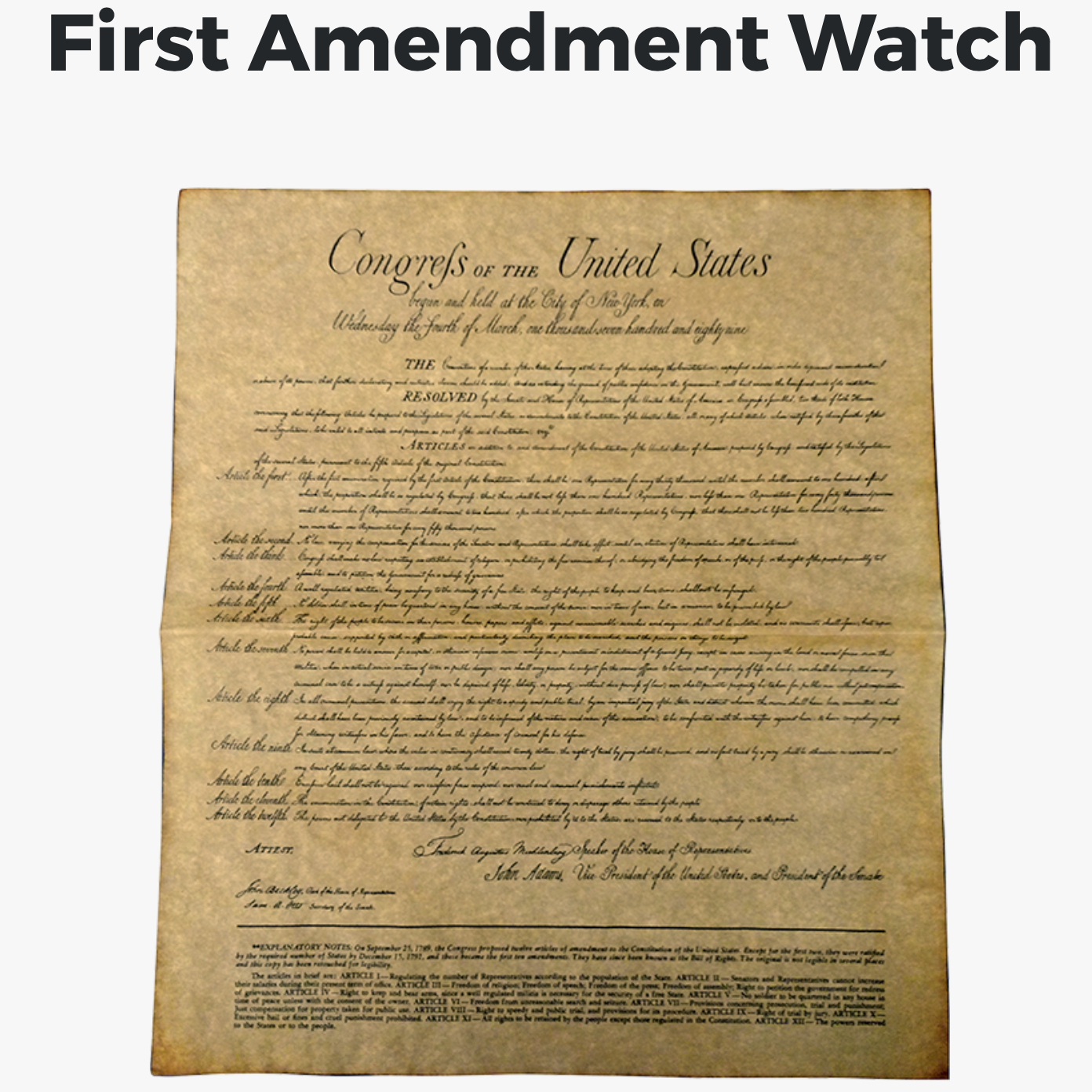
And yet, we are. A recent article on Politico enumerated how Buzzfeed, Newsweek and a cybersecurity blog were attacked by hackers unhappy with coverage. No one yet knows what the recent attack on the Dyn server that took down broad swaths of the internet but it surely too was meant to silence. The situation is far worse on the ground where political journalists have seen and felt fear and intimidation covering press events. How can we forget part of the First Amendment and the Bill of Rights? “Freedom of religion, speech, press, assembly, and petition.”
I do not let my students forget. I plow forward. Every week, my students and I look at fairness and balance in headlines at 35 news outlets. We read everything from Slate to Fox to BBC and Al Jazeera America. A strong free press here and around the world could never be “mainstream” but always have diverse voices interacting. It is our obligation as journalists to read widely to understand these voices.
A key element to the work of a journalist is newsworthiness. We debate, discuss, and honor the idea that every person has a story and as public servants we focus on reporting news that must be read. We ask the traditional questions to determine merit — is the news new? Are many people affected by the story? Is it close to home? Public figures get more coverage, but we can still debate the merits of Gawker’s piece on Hulk Hogan or if Kim Kardashian’s robbery was newsworthy? How deeply we delve into stories reflects the resources of any given organization and the audience that the outlet is trying to reach. And if there is one indisputable trend, it’s that resources have been stretched thin at many organizations, which impacts our attention and expectation of news we think we want.
Diversity has always been the trademark of news, even when we didn’t have such wide opportunities in the digital realm. Back when the US media industry was just getting going, scholar Gorham D. Abbott counted over 1500 news publications in print. For a population of about 13 million (1830 census = 12.86 million), that’s quite a lot. It is impossible to do an apples-to-apples comparison with the world wide web, where anyone can publish on the web today and where page views are the main currency of trade: Fox gets 713 million monthly page views, Buzzfeed 468 million and Mashable 80 million according to SimilarWeb. That is a lot more eyeballs from a lot more people, but what’s clear is that from our beginnings, we have celebrated diversity. Let’s not begin lumping them together falsely now into some vaguely convenient term that allows us to be lazy readers like that one fellow saying “I’m not an individual.”
If there is one thing we overlook today, it is a respect for facts. I have a deep and abiding honor of facts because I spent my first year at Forbes doing just that: factchecking. Far more than the latest political buzzword, factchecking is the assurance that each feature of an article is scrutinized to avoid both error and bias. Each story I was assigned to, I would meet with the reporter and editor to understand how the story came together, what sources were contacted, and what resources cited. My role was to be the impartial arbiter: I underlined every single line of every single story and argued with writers and editors when I thought a turn of phrase erroneous implicated the profile subject or a fact needed to be highlighted to always have both sides of the story. Not every publication can afford to have full-time factcheckers, so today, every journalist must learn the art of factchecking.
First rule: do it. Second: back up every sentence you write. Third: have at least three sources to corroborate a controversial fact. In this digital age, when Facebook is having a problem disseminating fake news stories and clickbait clogs the internet, it is even more imperative that news outlets factcheck, factcheck, and then factcheck.
Only when we do all this can we write a story with flow and finesse. That is probably the most difficult thing to do for any journalist, new or seasoned. We are better writers when we are stronger readers, and so I encourage my students to continue to read widely, to think holistically and to work on gathering information for stories that will matter.
I am a journalist, editor, factchecker, professor and storyteller. I am not mainstream.
In truth,
Tatiana Serafin





 Many years ago my Georgetown friend, Kathy McCabe, was inspired to start a travel newsletter,