Jun
02
2010

A View on the World Cup from Africa

Oil & Gas consultant and a sports commentator Adebisi Osunneye writes about his soccer passion and what it means to have the World Cup in Africa. For more of his soccer reflections see: http://nigeria.worldcupblog.org

In Football, or soccer as called in the US, the FIFA World Cup which holds every 4 years is the biggest tournament world over. It kicks off on the continent of Africa, South Africa to be precise. Viewership of the past mundial shows it is the biggest sports gathering after the Olympics and some matches actually return the highest single viewership for any sports event.

So it’s a big thing taking place in …cities South Africa between the 10th of June and the 11th of July 2010.

32 countries have qualified after rigorous qualification matches within their various continents going through different formats.  The participating countries are grouped as follows:

Africa 6, Europe 13, Asia & Middle East 4, Oceania 1, North America 3 and South America 5

Group A. South Africa, Mexico, Uruguay & France

Group A involving the hosts South Africa looks a very fair group for all, with only France having an array of soccer stars so can be said to have an edge. But the French had a tough qualifying campaign, having to go through the playoffs and the controversial Thiery Henry’s handball assist that ended the journey for the Irish. The South Africans would be playing with a lot of passion and determination in front of their home fans and it would be very difficult to defeat. The team has been together for a few years now and should exhibit a solid team play but would this be enough? For Mexico who just lost a friendly to England at Wembley, they come to the mundial with a lot of enthusiasm. I am sure their hopes lie in the fact that the team keeps improving per time, it’s a blend of old and youth and do understand themselves very well.  Uruguay would find it extremely tough coming out of this group even with their captain the former Manchester United player, Diego Forlan who is a very technical and clinical finisher. Would he be enough to motivate his colleagues? Time will tell

Prediction:

France and Mexico

Group B. Argentina, Nigeria, Korea Republic (South Korea) & Greece

I am a bit biased here as a Nigerian as I want my country to advance to the next round although preparation can be said to be non-existent in the fact that the ‘new’ manager has just about 3 weeks to tinker with the team before the first match. The good side however is the fact that he has retained the bulk of the team he met on ground which means he would only need to instill his own tactics and way of play within a group that already understand each other. All the team needs is a draw in the first game against Argentina. Talking about Argentina, they are surely clear favorites; anyway they are used to being classified as such. With the current world footballer of the year Lionel Messi, Milito of newly crowned European Champions League winners Inter Milan, Liverpool’s Mascerano, Tevez, Real Madrid’s slippery Higuian and a host of other world class talents, you will be kidding yourself to dismiss them in one go. But anything is possible in football; they lost out in the first round in 2002 despite parading the likes of Batistuta, a legend in Florence. These boys of a football great Maradona are in tip top shape and are sure ready to thrash opponents but would this happen? Where would I place Greece and South Korea but in a high place of respect as both teams are very technical and disciplined. The Greeks showed their team work stuff to win the European championships 2004 surprising all and sundry and they still have the same Manager today. For the South Koreans, they will rely on their quick and direct play and are being led by J Sung Park, a darling at Old Traford, Manchester.

Prediction:

Argentina and Nigeria

Group C. England, USA, Algeria & Slovenia

It is only the second place up for grabs in this group as England are having the best shot at winning the World Cup since 1990 semi-finals placing. They come in with a very balanced team in all departments having a very solid spine. They have Wayne Rooney, Steven Gerrard /Frank Lampard, John Terry/Rio Ferdinand and David James or Robert Green. The USA has an effective team that showed what they can do at the last FIFA Confederations Cup defeating the favorites Spain. I actually do not see the Algerians coming up with anything spectacular apart from being decent. For the Slovenians they will need all the luck in the world.

Prediction

England and USA

Group D. Germany, Australia, Serbia & Ghana

Another group where I do not expect any surprise, because I don’t think the Australians nor do I think the Ghanaians have what it takes to go past Germany and Serbia.  Ghana just announced that their biggest talent in a decade, Chelsea’s Micheal Essien would be missing; this will cost them a lot. Australia have been very decent and disciplined of late and this present crop are the ones to do it except that they face an ever dedicated German machine and enthusiastic Serbians

Prediction:

Germany and Serbia

Group E. Netherlands, Denmark, Japan & Cameroon

This is a group with highly technical footballing countries, playing the Scandinavians is never easy. They are all known for their organizational abilities. But the Danish guys will find it tough with Cameroon and Japan. The Japanese are enjoying a very settled team with great ambitions and it is sure they are ready to pounce on any opportunity offered by fellow Group E rivals. With a team filled with Sniejder, Ajen Robben, De Jong are ever so total in their display, it would be Netherlands fault if they do not qualify from this group. Cameroon have a huge task ahead of them. They are fond of featuring veterans and this may be their undoing, except they don’t would they make it to the second round. Do I stick out my neck for the Japanese, yes I do. Why? They have had a decent run in and their local league has really stabilized to give them a lot of confidence coming into this World Cup. Or maybe I just want some surprises to spice up the competition

Prediction:

Netherlands and Japan

Group F. Italy, Paraguay, New Zealand & Slovakia

Looks the defending Champions are not in the league they were 4 years ago as most of their players are not exhibiting the standards they are known for likewise coming together as a National side has not shown anything different. It’s a plus they have a relatively okay group with no disrespect to other members of this group. The Paraguayans started the South American qualifiers on a high tempo but they seem to be struggling at the crucial time. Slovakia did the giant killing on Russia so must be very confident but the New Zealanders I think are just very happy to be here.

Prediction:

Italy and Slovakia

Group G. Brazil, DPR Korea, Cote D’Voire & Portugal

Toughest call for me, this group would be extremely close looking at the quality of stars represented here. The DPR Korea should be prepared to enjoy themselves out there as the other three countries would look at their match ups as possibilities of taking goals advantage but I warn do not take any country for granted. Brazil, the ‘biggest’ nation in the world of football would find it tough, have never failed to advance as long as I can remember but should not be thinking of picking all the points as usual. Cote D Voire are tipped as the best African Nation going into this tournament but the appointment of sacked former England and Mexico manager, the Swede Goran Ericsson has put doubt in a lot of peoples minds. Ronaldo in the Portuguese side is a huge asset but have they got it right as a team? Would they not show boat having a lot of skillful players? This is tough to call. Brazil remain tournament favorites

Prediction

Brazil and Cote D Voire

Group H. Spain, Chile, Switzerland & Honduras

The European champions piggy bank on the form of the Spanish club side Barcelona to display one of the best football styles ever played in the game. They are the 3rd of the favorites up there with England and Brazil in no particular order. They need Xavi Hernandez, Fernando Torres and Andre Iniesta to be fit and going. I expect a comfortable group matches for them and do expect Honduras to spring a surprise on Chile and Switzerland. The Swiss are always very effective and could pose a challenge. For the Chileans they hardly ever rise to their potential and remain in the shadow of other top South American countries. Would they prove themselves capable this time?

Prediction

Spain and Honduras

You just have to be part of this excitement wave that will hold over 40% of the world’s population a month long. For product sponsors this is definitely time to show case your brand to the largest audience possible.

And for fans following their dear nations and preferences, I advise we guard our hearts as anything is possible.
May
04
2010

ENERGY BATTLES IN INDIA: BILLIONAIRES VERSUS BACKWATER

Author Megha Bahree travels extensively through India reporting on the country’s transformation from a traditional agrarian economy to an industrial one. She is currently a Staff Writer at Forbes magazine, and blogs at megha.me.


India is the world’s seventh largest consumer of electricity and is set to overtake countries like Canada and Germany as its economy grows. Last year GDP grew 6.5%, the 13th fastest in the world according to the CIA factbook. But this growth comes at a cost. Take for example, the village of Khamaria in the state of Chhattisgarh in eastern India.

On the one hand are villagers who only know an agrarian way of life, and on the other is Jindal Steel & Power, one of India’s luminary companies, which, through its steel plant, coalmines and a 1000MW thermal power plant is feeding the country’s energy and industrial demands. Naveen Jindal, the company’s executive chairman and a Member of Parliament, is adding on a $2.4 billion, 2400MW coal-fired power plant in the same region. (His mother, Savitri, chairs the O.P. Jindal group and is ranked the 44th richest billionaire by Forbes with an estimated net worth of $12.2 billion.)

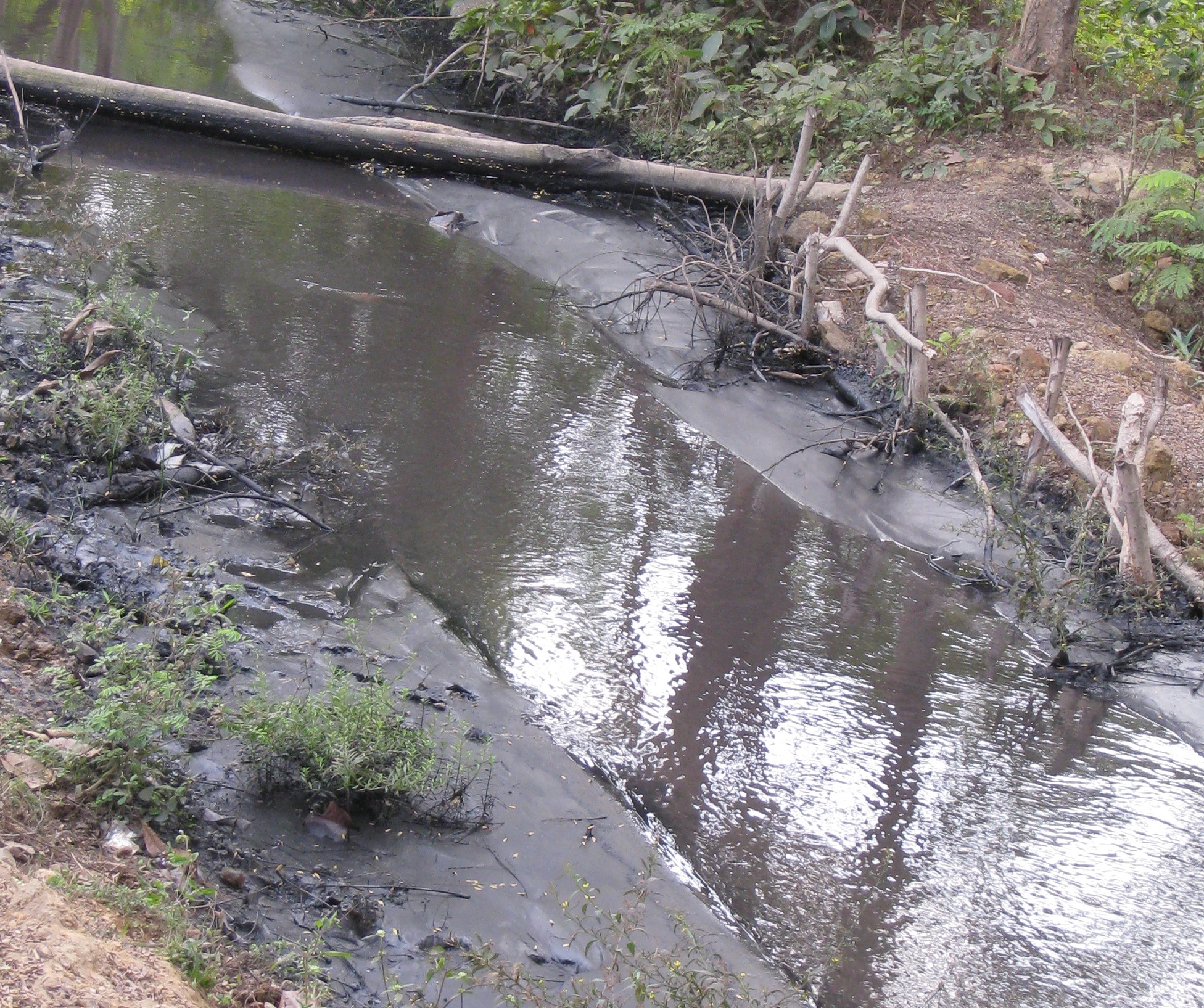
While the Jindals rake in their billions, I saw firsthand the devastation wreaked on the area. Driving through this thickly forested area, the green gives way to black – the soot on the leaves and shrubs is like rank topsoil.

Residents say that when they voiced their protest in a sanctioned public forum, they were beaten by police; some hospitalized.

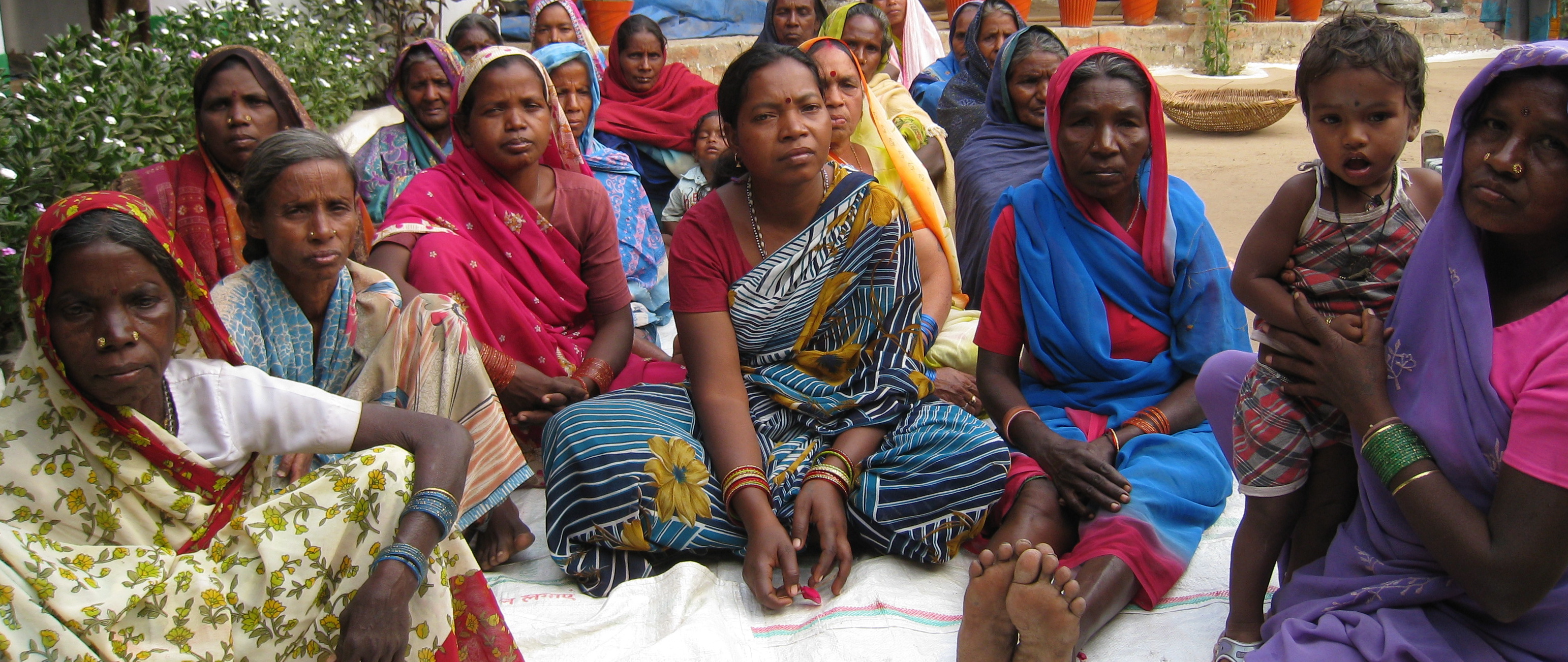
Two farmers I spoke with – Krishna Lal Sao and Raghunath Choudhary – collectively lost 7.5 acres that was the source of their livelihood for the expansion of this power plant. Years of filing petitions with the courts or the police have resulted in nothing but heartache. Sao has now taken a loan and started a stationery store to send his four kids to school while Choudhary, who is forced to farm someone else’s land, blames both the suicide of his younger son and his wife’s recent fatal heart attack on stressful circumstances caused by Jindal. Read More »

Apr
28
2010

MASISA: Focused on Sustainability in Latin America

by Roberto Salas, GrupoNueva’s Chief Executive Office and General Manager of MASISA

Nowadays, sustainability in the business environment must be seen as an opportunity for companies. These companies must get involved inside the economic, social and environmental trends offering opportunities through:

  • Business management innovation and efficiency.
  • Commitment and participation inside the social issues that affect our end markets.
  • Implement a responsible environmental management as part of the the business strategy

GrupoNueva is an investment holding company, specialized in the business of forestry and wood derivatives, creating sustainable value for its stakeholders through its triple bottom line approach.

GrupoNueva is the controlling shareholder of the multinational corporation Masisa S.A., one of the leading companies in Latin America in the wood boards for furniture and interior architecture business, who has 12 industrial complexes in Chile, Argentina, Brazil, Venezuela and Mexico, and more than 242 thousand hectares of planted forest in the region.

MASISA is committed to managing its business in a sustainable way, incorporating social and environmental variables as an integral part of its business strategy. The Company’s strong commitment to sustainable development has led to its market differentiation due to its responsible management of social and environmental issues.

External certifications and the use of the Sustainability Scorecard (SSC), which is the application of the Balanced Scorecard tool to the Triple Bottom Line approach, enable us to manage and systematically integrate to the business strategy the social and environmental issues.

MASISA’s road to leadership is the path it follows to be leader of sustainable development in the region. The path starts with the “basic management level,” i.e., make sure that the Company complies with legislation in the countries where it operates and therefore obtain government authorization to operate, but more important, Masisa secures and maintains a social license to operate based on dialogue and consultation with its stakeholders, in consistency with its Triple Bottom line culture. Read More »

Apr
13
2010

A Christian Perspective on Global Warming

I’ve been writing a book examining climate change and energy policy from a Christian perspective. The book, Jesus Wants US to Stop Global Warming, relates climate and energy issues to values Christian Americans hold dear: increased national security, personal and national financial prosperity, America’s continued supremacy as a global superpower, and, of course, the teachings of Jesus Christ.

Whether you believe global warming is happening or not, global warming solutions make sense.  The developed world is transitioning from a carbon-fuel economy towards a renewable-energy economy.  Consumer preferences, the inevitable regulation of CO2, the innovation of efficiency technologies, and the production of cheap renewable energy are all fueling this transition.  As always, firms and industries willing and able to adapt to the changing economic environment will remain competitive; firms and industries unable or unwilling to adapt will fold.

While global warming is often the focal point of energy and environmental politics, peak oil is startlingly left out of the conversation.  Peak oil scares me because it’s deleterious effects will be felt in my lifetime.  Oil industry executives, petro-geologists, and Saudi Princes agree: The world’s supply of cheap oil is running out. Sometime in the next two decades (if not already), world oil production will begin a slow, steady, and terminal decline.  Some predict demand will surpass supply as early as 2015.  When this happens, the dominos will begin to fall.

Our complete dependence on an uninterrupted supply of cheap oil cannot be overstated.   Our food supply is grown with petroleum-based fertilizers and pesticides, planted and harvested with heavy machinery, and then transported thousands of miles in trucks.  Rising oil prices mean rising food prices.  Any extended interruption in the supply of oil means an interruption in the food supply.  Since grocery stores turn over their inventory every three days, we are—as one commentator stated—“nine meals from anarchy.” Read More »

Mar
29
2010

Supporting Women’s Traditions Via Theater

Virlana Tkacz writes:

Theatre makes the past present, alive at the moment that you are witnessing it. The characters as well as the texts, poems and songs breathe with new life, and so a new future opens up for them. I am interested in creating theatre that is rooted in little-known or appreciated cultures of the East, giving voice to them. I have made theatre pieces about a modernist theatre in Kyiv in the 1920s, ancient Siberian ghost stories and Kyrgyz epics. Each of these theatre pieces opened a new world for me, the other artists involved and our audiences.

I am the artistic director of Yara Arts Group, a resident company at La MaMa Experimental Theatre in the East Village in New York. We create original theatre pieces in rehearsal by bringing together fragments of songs, stories and chants. At the core of every piece is a poem that sets the piece in motion. Since 1990 we have created 20 original theatre pieces that have premiered in New York, and are usually collaborations with artists from the other side of the world. Our productions feature traditional music, but are essentially contemporary pieces. Performed in a combination of languages, they are completely accessible to American audiences.

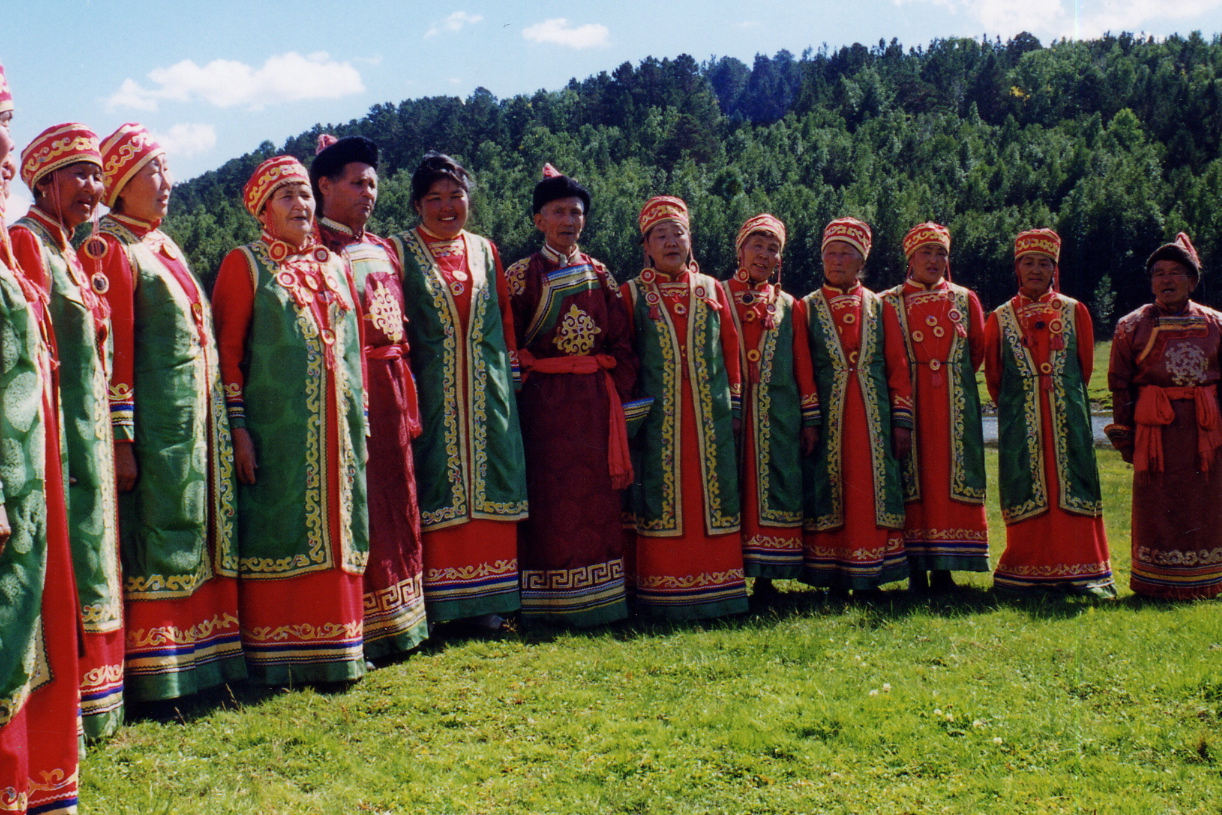
The first time I recorded songs in villages was in the Aga Buryat Region of Siberia. I soon learned that the older women in a community are usually the best source of songs, stories and knowledge about a traditional society. We created such pieces as “Flight of the White Bird” based on songs we heard from grandmothers in Aga, while “Circle” was based on songs and stories from the Ust-Orda Buryat Region on the other side of Lake Baikal.

Read More »

Mar
19
2010

Where are our “new” civic leaders?

They are everywhere.

They are regular women who do not wait for a government program, crisis or news-breaking story to highlight issues in their communities. (And they are, statistics tell us, more often women than men.) They see a need, and they have the courage and conviction to act. Their hands-on experience gives them the credibility to increase awareness, guide decisions, and create impact.

I am one of those women.  I believe deeply that it is my responsibility to help the community in which I live and to advance the common good. And I am not alone.

Some who share this commitment seek community in their neighborhood, some in their town, some in their country and some in the wider world.  The commitment might derive from a different belief system than mine, but it is a shared conviction.

The “new” civic leaders come to their roles by different avenues.  Mine happens to be The Junior League of Monmouth County, which has been a continual inspiration for me for 33 years. I’ve seen my League address such important problems as elder abuse, fetal alcohol syndrome, AIDS, teen pregnancy, and illiteracy.  Frequently, these were issues that were unmet or underserved in our community – lacking attention or resources.

Inspiration to aspire to civic leadership can come from many sources.  Mine was a grammar school trip to a county nursing home to sing Christmas carols and visit with the patients.  I realized that there were great needs in my community – that not only were there people suffering who had little means to care for themselves, but that I could do something to help them, if only for a day.

I spent most of my school years in all-women environments and knew the potential and power women have to make a difference.  When I was in my mid-20’s, I joined The Junior League to set down roots in the community where we had bought a new home and were expecting our second child.  My mother recommended I join this group of women to meet people and become involved in my community.  Of course, my mother was right as I came to know women whom, to this day, I highly regard. Read More »

Feb
22
2010

The Art of Managing Museums

Last year, I visited the American Museum of Natural History in New York and as I was listening to the explanation of the big bang, I realized the person speaking to me on my headphones was Whoopi Goldberg. The science was pure and factual, and yet, the delivery was so friendly and so magical, that even a lay-person like me was completely engaged.

As an art museum director, I reflect on how science museums, zoos and botanical gardens have been so much more effective at adapting to 21st century needs and attracting diverse audiences. Art museums in the United States have a tough challenge in this respect, as the arts are less and less a funding priority in schools. From a very early age, the message tends to be that art does not quite mesh with life as do math, language and sports. The arts are also competing these days with endlessly-increasing entertainment and social offerings. Despite and maybe even because of all this, museums are placing more efforts than ever on attracting new audiences; and methods to do so have become quite creative.

Museums today, are assuming outreach roles way beyond traditional ones. The definition of diversity has expanded beyond the “multi-culti” 1980s socio-economic and cultural model. Approaches have widened with activities that stretch across disciplines and interests: MoMa offers yoga classes in their galleries; and Queens Museumof Art has cooking workshops, for example. The Bass Museum of Art (which I manage) has a jazz series and monthly Sunday classical concerts.

In fact, museums are following what leading art fairs so effectively set into motion: embracing lifestyle and social activities to attract young professionals, socialites, and the general public to its doors with happy hours, parties, programs for seniors and wine-tasting events. Finally, museum cafes are being upgraded and museum restaurants are becoming, more and more, destinations in their own right (see January 29, 2010 New York Times article: “After the Putti, the Baby Calamari”). Read More »

Feb
16
2010

The Art of Jewelry and Theater

I am Gualti, a young artist originally from Padua. I moved to Venice in September of 1998 to inaugurate my atelier-galleria following a long, tortuous, and sensitive evolution. I am self-taught, a “material experimenter”, an inventor of decorative forms for the body, who abandoned myself to the creativity that passionately consumes my entire existence. Since childhood, my extreme sensitivity has left me in awe when faced with the grandeur of Nature.  The places of my adolescence strongly influenced me:  I admired small rivulets of water tripping along in myriad kaleidoscopic reflections, observed the sinuous dance of silvery algae gracefully suspended in that mysterious crystalline surface while their harmonious movement would work an almost hypnotic spell. I examined minutely the delicate buds of plants, scrutinized every detail of tiny teeming creatures and their interaction with the physical environment around them. The world behind the superficiality of reality enchants me…I am particularly attracted to everything that is beneath the surface: small fossils, twigs, stones, and above all roots…tangled, woody, branched, fibrous, tubers, sometimes aerial or creeping…I am fascinated by small anthropomorphic apparatus and their organic forms…

In each of my jewels I seek “the sense of lightness”, using particularly unusual materials, assembled and fused with an extraordinary vision, always experimenting in a new, magical, and unique idiom…

They are jewels and ornaments in a rainbow spectrum, apparently fragile or difficult to wear…but in reality as supple and lightweight as feathers. They are extensions of life…to be savoured every instant of every day, and can be touched and worn casually, but certainly without going unobserved…Glassy hearts pulsating with light like watery mirrors, from which transparent filaments and iridescent tips reach out – offshoots of light.Bracelets…rings…earrings…collars…headpieces…the entire body is willingly captured, dressed, and transformed by these organic sculpture-jewels that I define as extensions of the body Read More »

Feb
08
2010

The Art of Natural Perfumery

Mandy Aftel is an authority on natural essences and custom perfumes and can be found at (www.aftelier.com).

I create perfume–and people wear it–because beauty and art are a vacation from reality. Beauty brings about a morally valuable state in the mind of the beholder.  A well-proportioned and beautiful perfume can make those who smell it long to enter a realm of such beauty and perfect proportion.  The power of beauty may derive from its ability to minister to this longing.  The beautiful object creates, in the mind of those who attend to it, the spiritual home that reality does not provide. Beauty sustains an inner life. It feeds us.

I find that plants have an inherent beauty that is reflected in their aromatic component.   Natural aromas are richer and more nuanced precisely because they are real and simply too inviting for me to resist. I loved the complicated histories of natural essences, and their complex characters—at once delicate and harsh, fresh and decaying,—which made the perfumer’s palette so intense. I literally had to get my hands on them. The sweet, the foul, the spicy, and the fresh – I found them all alluring.  I loved the way they smelled and the way they looked, some like liquid rubies or emeralds in the light, some thick and pasty, other light and thin.

The names themselves seduced me –ambergris and costus, ylang ylang concrete.  Choya loban, orange flower, boronia, civet, tonka bean, champaca. Even those I recognized—jasmine, sandalwood, frankincense, myrrh, bitter orange, vetiver—conjured up ancient civilizations and exotic customs, long journeys and sensual torpor. The endless variations on each theme fanned my obsession. Once I discovered rose absolute, I had to try not only the Bulgarian version but the Russian, Moroccan, Turkish, Indian, and Egyptian as well.

Until the 1880s, all perfumes and fragrances were created from plant—and some animal–materials. The displacement of natural essences by synthetic materials in commercially produced fragrances began at the turn of the last century.  Unlike the natural essences, synthetic fragrances were cheap, colorless, stable, and consistent, and these qualities – and their “modernn ess” made them irresistible to industry. Eventually synthetics were used almost exclusively, and the demand for the naturals dwindled. Read More »

Jan
28
2010

Venezuela: a territory of fear and beauty

“When you leave your house in the morning, you do not know if you will return alive in the evening”.  Either in rich suburbs or in poverty-sticken areas, this is a sentence which expresses the fear of the citizens in Caracas, the capital of Venezuela. In 2009 there were 795 kidnappings in Venezuela, a 48% increase from the total reported in 2008. What is more fearful though is that now there are no limits – it does not make a difference if it is a banker like the case of German Garcia Velutini who was kidnapped last February, or children like the case of a little 10 year old girl and a 7 year old boy who were kidnapped in Maracay in November; all are still with their captors.

Caracas is also the third most violent city in the world, after Ciudad Juarez in Mexico and New Orleans in the United States. The rate of homicides in 2008 was 52 persons for every 100 and of these 13 were gunned down. For 2009 the statistics indicate the rate of homicides increased to 56 persons for every 100 inhabitants, and more than 14 persons were murdered.

Such interpersonal violence is a public health issue at a macro level due to social inequality, fewer employment opportunities, loss of values such as religion and intolerance to diversity.  At a micro level, a high increase in the number of firearms, alcohol and drug consumption and a continuous angry invitation to violence by the president each time he does his 5 to 6 hour weekly television updates.  Social abuse and violence has been taught and rehearsed repeatedly week after week for the last 11 years.

Indeed in 2009, 57 uniformed men were assassinated, 27 of whom were part of the Metropolitan Police. This reveals a high level of corruption and consequent distrust by the population. Read More »